
Surfing the Turkish Tourism website, they proudly inform
you that Turkey is home of The Blue Mosque, home of the colour Turquoise, home
of the historic site Cappadocia, home of Troy, home of the Silk Road, home of
the Golden Horn and home of ancient Gods. But there is no flash pitch about the
capital, Ankara!
Ankara is clean, hilly and expansive. The word Ankara
means anchor, a rather fitting name if ever there was for a capital.
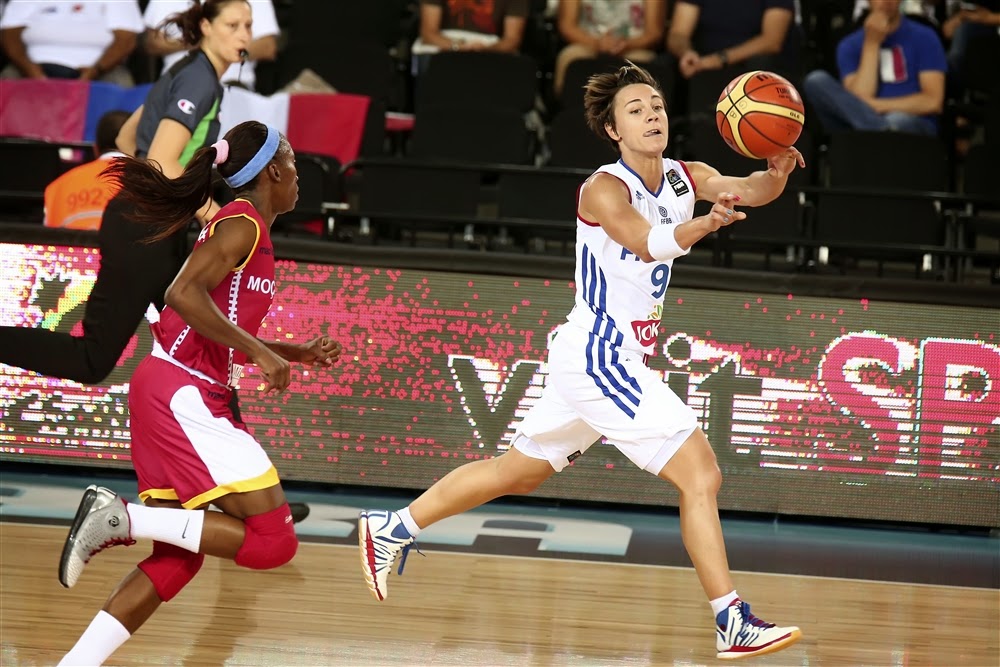
I was based in Ankara for six days for the FIBA Women’s Basketball World Championship; I was there to support the French
team. The venue in the capital was the Architectural award winning Ankara Arena
which hosts a variety of events; the first event that was held in it after it
was built in 2010 was the FIBA World Championship, so no stranger to major
basketball events. 16 countries were there to compete for the cup with the games
being played both in Istanbul and Ankara. Ankara was host to Brazil, Canada,
Czech Republic, France, Japan, Mozambique, Spain, and host team Turkey.

I have been to and participated in big sporting events in
South Africa including being at the World Cup Soccer at the iconic Moses Mabhida,
but all of those matches pale into significance witnessing my first international
basketball game, the entire experience was tingling. The last game on the
opening day was a cracker between Olympic Silver Medallists’ France and the
home team. Fans in their droves swarmed the stadium.
It took a while to collect my tickets and find the
correct entrance. By the time I had presented my ticket to the FIBA usher, I
had walked through a metal detector, had my bag searched by police then frisked
by another police officer, before the final police check confirming the legitimacy
of my ticket. Finally offering it to an usher who warmly welcomed me.
Having purchased my tickets online months prior, I by
some stroke of luck had landed myself in the VIP area. The online booking
system had an early bird ticket sale, so I paid for one ticket and got the remainder
of the tournament basically for free. It also so happened that all the
travelling French fans were seated in the VIP area.
The atmosphere in the venue was electric. Turkish flags
floated aloft as the bearer’s sang a catchy tune that obviously was the anthem
for the Turkish team. An enclosed space with well over 20,000 people all
chanting, singing and cheering was passionate. Needless to say France went down
but only by two points.

The remainder of the tournament, the Les Bleus sadly lacked
the spark they had in London finishing second in their group, spiralling out in
the quarters in Istanbul with a defeat against ace team USA. Then they lost to
Canada in the class 5 – 8 games, after beating them in the group games. In the final
game of France’s tournament they did manage to get some respect back with a win
over Serbia and finishing in seventh.
The Les Bleus fans welcomed me into their small clan of
20 or so. Each game I had my face painted as an honorary frog. I was so proud
of neighbours Mozambique, how they held their own on the court.

As far as sightseeing goes, Ankara is a massive, vibrant,
cultural city but only really offers a handful of tourist attractions. Stumbling
upon the Tourist Information Centre at the main train station across the way
from the arena, the fabulously helpful tourism officer presented an impressive
colour brochure, in English, of all the sights and stops in Ankara. All could
be done on a walking tour over two days.
I found the public transport system difficult to figure
out and eventually gave up. From the hotel where I was staying, the arena was a
20minute or 30TYL ride away and the yellow cabs were an attraction in itself. I
am sure that the drivers were awarded for the most number of fares they could
take on a day, not how scenic a route they took you on. Every ride felt like a
race between A and B and on arrival your hasty exit was appreciated. It was a
cheap and fast way to get around.

My first day out exploring, I got deposited at my
landmark of the arena and wandered along the wide main road towards the Opera
House, the Ethnography Museum and the State Art and Sculpture Museum. The Opera
House was all closed up and seemed to be out of season. Across the road was a
glee-filled Fun Fair snuggled up right against the main road threatening to
toss out unsuspecting riders from the brightly coloured rides. Further up the
road I came across the grand State Art and Sculpture Museum with the Ethnography
Museum alongside. In the garden proudly sat a number of statues of famous Turk
artists and sculptors as well as what looked like fragments of Roman ruins that
were being slowly restored, were littered around the garden and had become a
playground for the local feral cats.
With time on my side I opted to go off the beaten track, I
turned off the main road and made my way deep into Ulus, the historic centre
containing a number of museums, early republican buildings and the ancient
Ankara Castle. Ulus is millennia old and I enjoyed getting lost taking small cobbled
lanes, discovering roads and roads of shops spilling out onto the road. The
gradients of the roads were quite a hike but the locals had no difficulty
trekking up, usually lugging a hefty load.

On the only blue skied day I had, I ventured to the
Antikabir. Translated to English it means a memorial tomb and is the mausoleum of
Mustafa Kemal Ataturk, the leader of the Turkish War of Independence and the
founder and first President of the Republic of Turkey. The site where the
Antikabir was built is the most central in Ankara and can be seen from almost all
areas in the city.
The ceremonial courtyard was alive with countless of wiggly
worms with hundreds of pre-schoolers out on a day-excursion learning about the
history of their country. With each group they had an assigned guide donning a
dark tailored suit hugging their ripped frames, they more resembled bodyguards but
each and every one of those big burly blokes appeared to be gentle giants. As I
was about to depart, I got to see the pomp and ceremony of the Changing of the Guards.

A short yellow cab drive away, I visited the Kocatepe
Mosque. It gets a mention in all research you do when you Google Ankara. I
spent some quiet time walking around the exterior as the mosque was closed to
visitors. It took close on 20 years to build and is the largest mosque in the capital.
From there I jumped in another zippy cab and landed up at the Ankara Castle.
The outer citadel follows the ledges of the hill but inside
the castle walls you find the real old Ankara with a number of locals quietly
getting on with daily chores. Beyond the tourist track, the houses were all
old, crumbling, unloved and dilapidated. The views from up on top of the castle walls
are exquisite overlooking all of Ankara. I parted with 12TYL for a freshly
squeezed Pomegranate juice, the most expensive food and drink I had spent but
the name of the café was the only reason I stopped. It was one word, And.
Would I recommend a visit, about as enthusiastically as I
would encourage someone spending their hard earned holiday going to
Johannesburg, but for a two day visit as you head to Cappadocia – perfect!
